
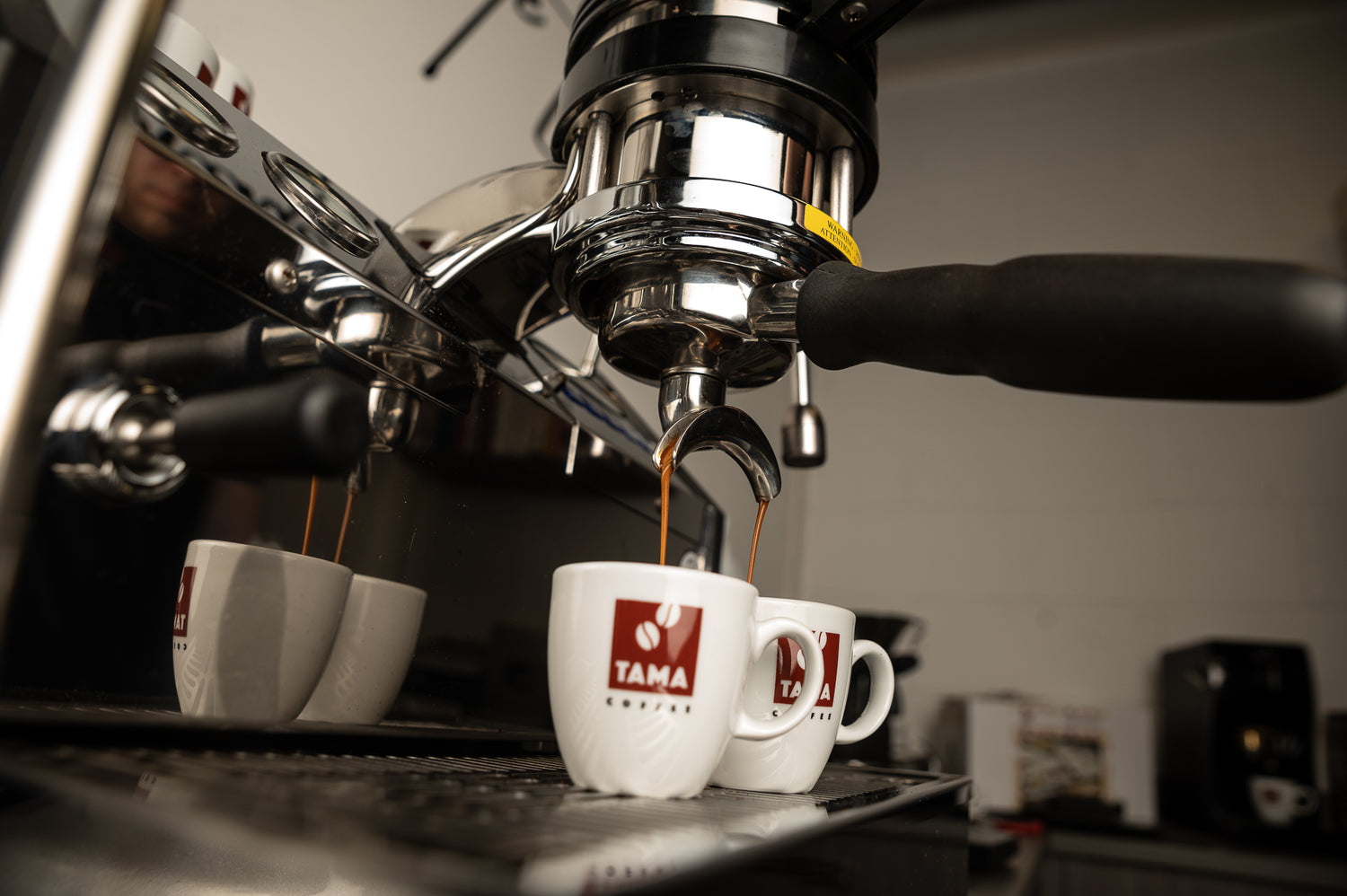
What is crema and how does it form?
Crema is the fascinating result of the high-pressure infusion that occurs during espresso extraction. Without pressure, crema would not exist.
During the process, pressurized water dissolves carbon dioxide trapped in roasted coffee beans. When the prepared liquid returns to normal atmospheric pressure on its way to the cup, it can no longer retain all the gas, which escapes from the solution in the form of countless tiny bubbles. These bubbles remain trapped in the coffee and appear as a stable crema.
Interpreting the secrets hidden in espresso crema: What does it reveal?
Espresso crema is an important piece of the puzzle, carrying a wealth of information for both baristas and coffee lovers. Its influence on the perception of coffee is undeniable, but it is important to note that, despite its relevance, crema alone is not enough to fully predict the nature of a coffee. Here are the precious clues we can gather from this fascinating characteristic:
Freshness: The freshness of coffee has a direct link to the amount of carbon dioxide trapped in the bean. The older the coffee, the less carbon dioxide will be present, and consequently, the less abundant the crema will be. Crema can therefore be an indicator of the coffee's freshness.
Roast level: The roast level significantly affects the crema. To obtain a darker and denser crema, more intense roasts are necessary, often preferred by industrial roasters to destroy the aromatic profile, which is where the purely Italian cultural heritage of coffee that must hold sugar for 10 seconds comes from.
Why stir the crema
Crema usually tastes more bitter than espresso; if we separate it from the coffee, the latter will be sweeter.
We recommend stirring it; the goal is to find a balance between acidity, sweetness, and bitterness that work together in the cup. An excess of any of these elements will unbalance the espresso.
Other factors that influence crema
Other variables include time, temperature, and coffee variety; these can make the crema coarser or finer, darker or lighter.
Honey and natural coffees usually produce more crema as they contain more lipids, proteins, sugars, and minerals. Washed coffees create less crema.
When it comes to variety, Robusta coffees create more crema, but it will be less compact and less aromatic than Arabica coffee crema.
During espresso extraction, the temperature and pressure present can affect the type of crema. If your crema is light, thin, and disappears quickly, your espresso may have been under-extracted. Less common causes can be: the machine's pressure is too low, the coffee is too old, or the water is too cold.
Thank you and enjoy your coffee!